

Equity refers to company ownership, liabilities are amounts your business owes, and assets consist of the equipment, materials, and cash your business owns. To help equip you with the knowledge to tackle your financial management confidently, we’ve put together this accounting 101 guide. We’ll walk through the core concepts of accounting, show you the process of how to do accounting, and offer you tips on how to use accounting to gain a better understanding of your business and its future. If bookkeeping keeps getting pushed aside as your business starts growing and you simply can’t find the time to get your books in order every month, you should consider hiring a professional to help you. Diamonds may be forever, but the ink on contra asset account your expense receipts is not.
- Joe looks at the balance sheet again and answers yes, both Cash and Common Stock were affected by the transaction.
- They apply to almost any business type and size, which makes having these basic bookkeeping skills valuable.
- Connecting directly with a business bank account simplifies reconciling transactions and improves the accuracy of your financial statements.
- Especially if your accountant ends up telling you you’ve been using them incorrectly for the past year.
Startups
- Growing businesses that offer credit to customers or request credit from suppliers use the accrual basis of accounting.
- We asked all learners to give feedback on our instructors based on the quality of their teaching style.
- By making this purchase, you’re decreasing your cash and increasing your equipment, you’d record a $2,000 debit for the equipment account and a $2,000 credit for the cash account.
- As you can see in the balance sheet, the asset Cash decreased by $14,000 and another asset Vehicles increased by $14,000.
- Buildings is a noncurrent or long-term asset account which shows the cost of a building (excluding the cost of the land).
- Because the funds are accounted for in the bookkeeping, you use the data to determine growth.
Additionally, monitor your outstanding bills (accounts payable) and pay them on time to maintain good relationships with suppliers, avoid late fees, and manage your business’s credit rating. Business expenses can add up fast, and if you’re not tracking them, you risk missing out on tax deductions or inadvertently overspending. Be sure to open a dedicated business bank account and keep copies of receipts to make your life easier when you need to reconcile your bank statements and your books. Letting financial transactions pile up is one of the easiest ways to lose track of your books. Recording invoices, receipts, and income regularly keeps your numbers up-to-date and your financial statements easy to manage.

When to Involve an Accountant

Bookkeepers help small businesses create and manage their financial records, process transactions efficiently and accurately and reconcile various financial accounts. They also ensure that these processes are reported accurately, providing valuable financial insights and helping guide future business moves. They help businesses remain profitable and make data-informed decisions. Single-entry systems are most commonly used in small business bookkeeping since this process is ideal for limited transactions.
. Bonds Payable

If you found any issues during your review, the next step is to address them. Accounting entries may be off because of things like depreciation, deferred revenue, prepaid expenses, bookkeeping 101 and human error. For businesses operating in the US, adhering to GAAP rules is required. If your company does business globally, you may also need to adhere to the International Financial Reporting Standards (IFRS), which have separate guidelines and rules.
Choose an entry system

You can learn a lot about how to do accounting for small businesses just from browsing the internet. But nothing beats up-front, personalized advice from a certified professional—in this case, a bookkeeper, accountant, or CPA. Bookkeepers, accountants, and CPAs all bring something different to the table. Mixing together personal and business expenses in the same account can also result in unnecessary stress when you need to file taxes or do your bookkeeping. It could mean a business expense gets lost in your personal account and you miss out on an important deduction. Keeping an accurate, up-to-date set of books is the best way to keep track of tax deductions (expenses that you can deduct from your taxable income).
- This can be the result of having stiff competition or high operating expenses.
- A question that often has been asked is “my Income Statement says I have made a profit of $10,000 – how come I don’t have $10,000 in my bank account?
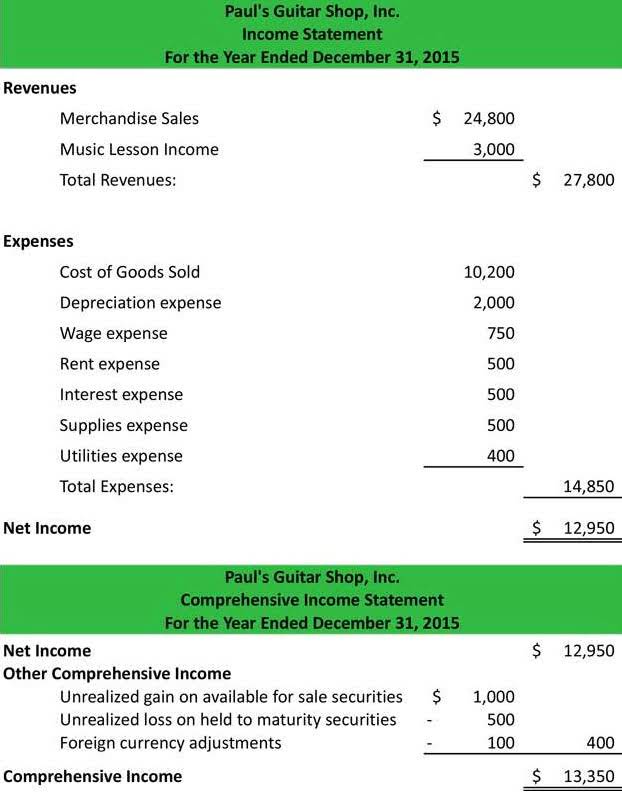
- The income statement is a holistic report that shows revenue and expenses over a set period of time.
- Most individuals can learn the basics of bookkeeping in about six months, according to the US Bureau of Labor Statistics (BLS).
The cash basis of accounting is usually followed by individuals and small companies, but is not in compliance with accounting’s matching principle. Fees earned from providing services and the https://www.bookstime.com/ amounts of merchandise sold. Under the accrual basis of accounting, revenues are recorded at the time of delivering the service or the merchandise, even if cash is not received at the time of delivery.